
A young couple visited the showroom just last week, clutching a roll of architectural drawings for a stunning new-build property they were purchasing. They wandered through our displays of hand-carved marble and limestone, admiring the craftsmanship, but there was a distinct hesitation in their body language. When I approached them, the gentleman sighed and unrolled the plans on my desk.
“We love the idea of a Chesneys fireplace,” he admitted, “but the developers didn’t build a chimney stack. We assume that limits us to an electric fire, doesn’t it?”
I smiled, because this is perhaps the most common misconception I encounter. There is a prevailing belief that the “best” fireplace—the kind that anchors a room and provides that essential sense of home—requires a traditional masonry chimney. I was happy to tell them that the reality is quite the opposite. In fact, removing the restriction of a chimney often liberates the design process, allowing us to install the perfect heating solution exactly where they want it.
The question isn’t simply which fireplace is possible, but rather which fireplace type is best for their specific lifestyle. To help them decide, I walked them through the three sophisticated solutions we offer for homes without a chimney.
The Authenticity of Bioethanol
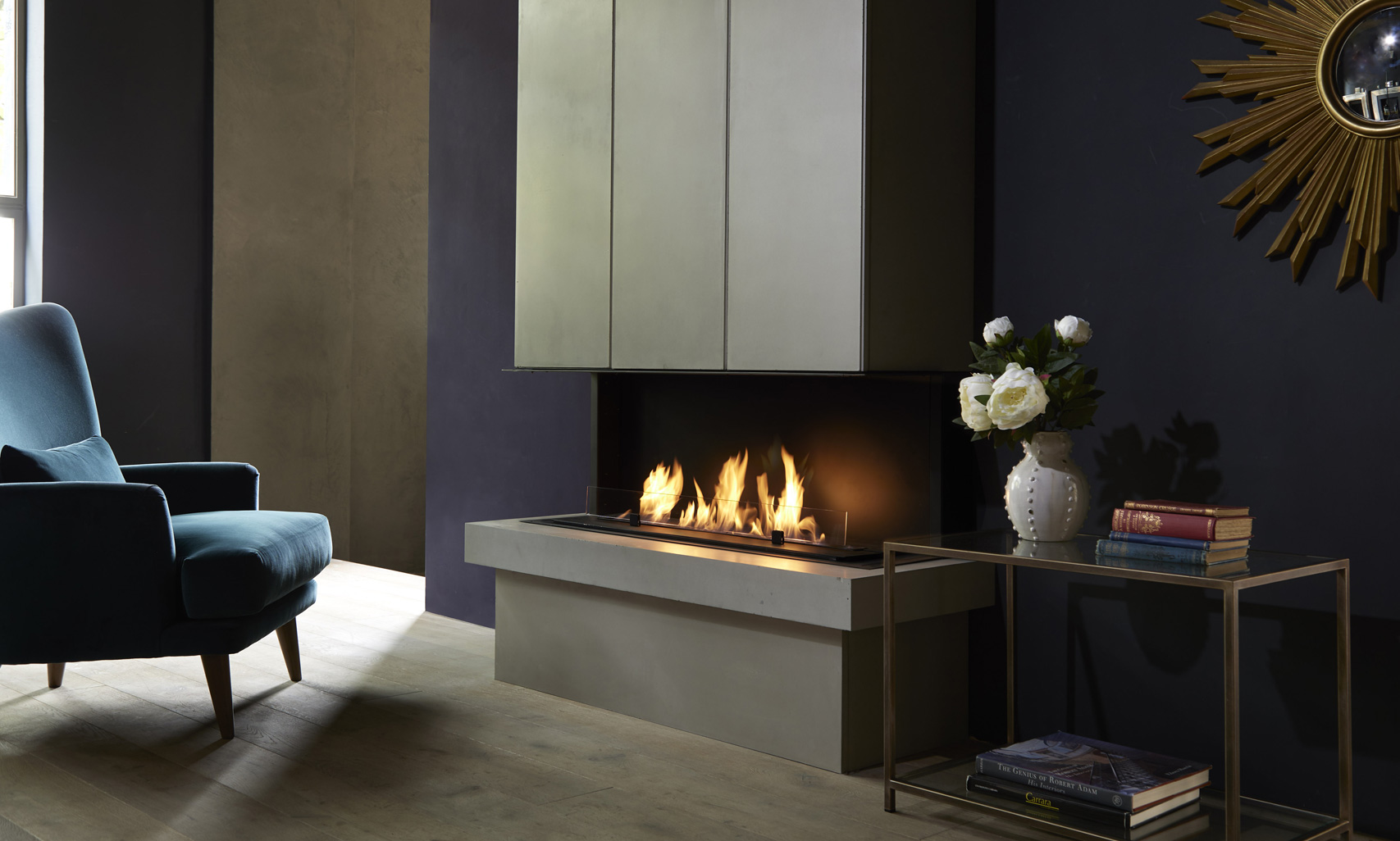
We started in front of a bioethanol model housed in a Bolection surround. I lit the fire for them, and the immediate reaction was silence—the good kind. They watched the yellow flames dancing and felt the gentle warmth radiating into the room.
“Is that… real?” the wife asked, surprised.
I explained that Bioethanol is the best option for clients who crave the authenticity of a living flame but lack the infrastructure for gas or wood. Because it burns plant-based fuel cleanly, there is no smoke, soot, or ash, and crucially, no flue is required. I pointed out that for their new-build, which was likely very airtight, this was an elegant solution: it provides a genuine focal point without overpowering the room with intense heat. For those seeking pure atmosphere, Bioethanol is often the winner.
The Convenience of Electric
Next, we moved to our electric fire collection. I could see the husband was sceptical—the word “electric” often conjures images of unconvincing orange bulbs from decades past. However, when I switched on one of our Olympus electric fires, his scepticism vanished.
Modern ultrasonic technology creates a flame effect that is virtually indistinguishable from the real thing, incorporating rising ‘smoke’ and glowing logs. I explained that this is the best type for homes where complete control is paramount. You can enjoy the visual ambience of the fire on a warm summer evening without the heat, or dial up the temperature at the touch of a button. For a high-rise apartment or a home with young children, the safety and “plug-in-and-play” simplicity of Electric is unmatched.
The Tradition of a Wood-Burning Stove
Finally, I asked them if they missed the ritual of building a fire. “We do,” the husband admitted. “We love the crackle and the smell of wood smoke, but we thought that was impossible without a brick chimney.”
I led them to our wood-burning stoves and introduced the concept of a Twin Wall Flue system. I explained that this is an engineering solution that allows you to install a real wood burner almost anywhere. Instead of a masonry chimney, we install a rigid, insulated metal flue pipe to carry combustion gases out of the home safely.
I showed them photos of how this can work: the flue can pass through an external wall or go up through the roof. It can be concealed within a false chimney breast for a traditional look, or left exposed as a striking architectural feature. I explained that this option gives them the high heat output and the primal connection to the fire that they were craving, all while using sustainable, carbon-neutral fuel.
What Is The Best Fireplace for Homes Without a Chimney
By the end of our consultation, the couple realised they weren’t limited at all; they were spoilt for choice.
So, what is the best fireplace type for a home without a chimney? As I told them, it depends entirely on the experience you desire.
- If you want the romance of a real flame without the construction work, choose Bioethanol.
- If you prioritise versatility and safety with zero maintenance, choose an Electric fire.
- If you want the ritual, heat, and tradition of real logs, choose a Wood Burning Stove with a Twin Wall Flue.
The couple eventually settled on a stunning bioethanol fire set within a classic limestone surround. They left, realising that the absence of a chimney wasn’t a compromise but rather an invitation to choose a truly modern luxury